Salesforce has become one of the most powerful CRM platforms for businesses around the world. From managing customer relationships to automating workflows, Salesforce helps organizations improve operations and boost productivity.
However, many companies soon find that the standard CRM features do not fully meet their unique business needs. Each organization has different workflows, integration requirements, and customer engagement strategies.
This realization is why many companies invest in custom Salesforce applications.
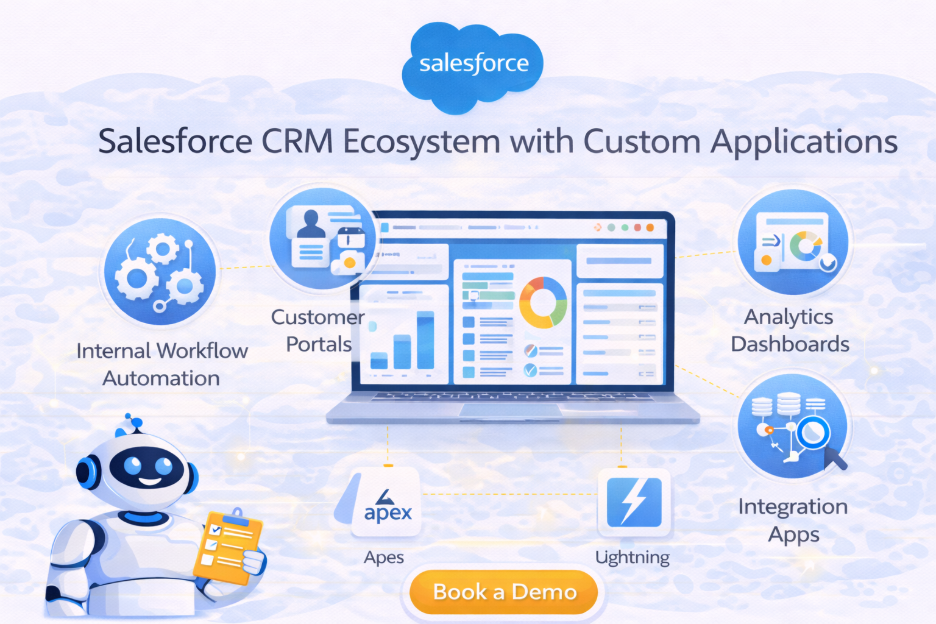
Salesforce app development allows businesses to broaden the platform’s capabilities by creating tailored solutions for their operations. Whether it’s a customer portal, an automated service workflow, or an analytics dashboard, custom apps can turn Salesforce into a robust business ecosystem.
This guide explains how Salesforce app development works and outlines best practices for successful implementation.
Why Custom Salesforce Applications Are Important?
Businesses today compete in fast-paced markets where efficiency and customer experience are essential. Standard CRM features may handle basic tasks, but organizations often need specialized tools for effective operations.
For instance, a logistics company may need shipment tracking within Salesforce, while a healthcare organization might require patient workflow management within its CRM system.
Custom Salesforce applications address these needs by allowing businesses to create solutions tailored to their specific requirements.
Many organizations also opt to build scalable applications through Salesforce Appexchange App Development Services, enabling them to share their solutions with other Salesforce users via the AppExchange marketplace.
These applications not only enhance Salesforce’s functionality but also create new opportunities for innovation and revenue.
Understanding Salesforce App Development
Salesforce app development involves creating custom applications within the Salesforce ecosystem to improve CRM functionality.
Developers use Salesforce technologies like the Apex programming language, Lightning Web Components, and tools like Salesforce Flow and App Builder to design scalable applications.
These applications can automate workflows, manage complex data processes, and connect Salesforce with other business systems.
Organizations that integrate AI capabilities into their CRM systems often partner with specialists offering Salesforce Agentforce consulting services to build smart applications that support automation and predictive insights.
By combining custom development with automation tools, businesses can create efficient CRM environments.
Common Use Cases for Custom Salesforce Applications
Custom Salesforce applications can support various business operations.
Many companies develop internal applications that automate sales processes, manage approvals, or track service requests. These solutions help teams work more efficiently by reducing repetitive manual tasks.
Customer-facing applications are also common. Businesses often create portals where customers can submit service tickets, track orders, or manage subscriptions.
Another frequent use case is integration. Companies frequently build custom applications that connect Salesforce with ERP systems, marketing automation tools, and external databases.
Organizations implementing AI-driven automation often work with an experienced Agentforce implementation partner to embed smart workflows within their Salesforce environment.
These integrations allow businesses to automate complex tasks while keeping a unified CRM system.
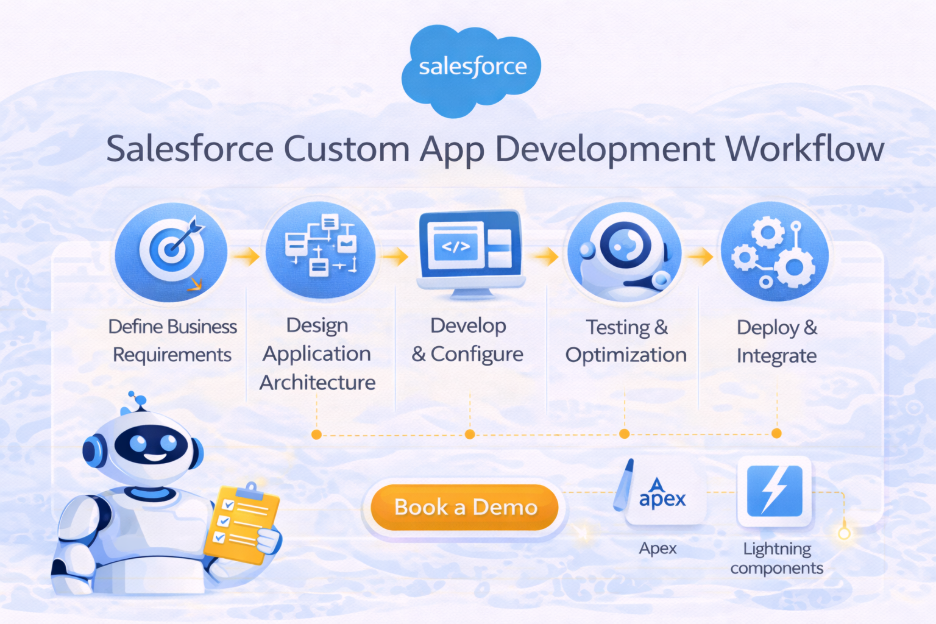
The Salesforce App Development Process
Successful Salesforce app development projects follow a structured process.
The project starts with identifying business requirements. Organizations need to determine which workflows need automation and how the application will support their operational goals.
Next comes designing the application architecture. Developers establish the data structure, user interface, and integration of points needed for the application.
During the development phase, custom logic and automation workflows are built using Salesforce development tools.
Testing is crucial before deployment. Applications should be tested thoroughly to ensure they function correctly and meet security standards.
Finally, the application is launched within the Salesforce environment and integrated with other systems.
Organizations integrating AI automation during this stage often use Salesforce Agentforce implementation services to set up smart workflows and enhance CRM performance.
Benefits of Salesforce App Development
Custom Salesforce applications offer various advantages for businesses.
One key benefit is automation. Organizations can automate repetitive tasks like approvals, notifications, and routing service cases.
Another advantage is improved data visibility. Custom dashboards and analytics tools help decision-makers access real-time insights into business performance.
Salesforce applications also foster collaboration across departments. When systems are integrated within Salesforce, teams can access information easily and work together more effectively.
Additionally, custom applications improve scalability. As businesses grow, these applications can be expanded with new features and integrations.
Best Practices for Salesforce App Development
To ensure successful Salesforce development projects, businesses should follow a few best practices.
First, applications should prioritize business objectives over technical features. Understanding the organization’s operational challenges helps ensure the application delivers real value.
Second, scalability should be considered during development. Applications should accommodate future growth and additional integrations.
Security is another important factor. Salesforce applications often handle sensitive customer data, so proper security measures and compliance standards must be enforced.
Finally, organizations should adopt an iterative development approach. Continual improvements based on user feedback help keep applications effective over time.
Conclusion
Salesforce app development enables organizations to create customized CRM solutions that enhance productivity, streamline workflows, and support long-term business growth.
Companies seeking reliable expertise often turn to top-notch salesforce consulting services to design scalable CRM solutions that fit their operational needs.
Collaborating with experienced salesforce consulting partners helps businesses implement effective Salesforce applications while ensuring security, scalability, and lasting success.
Follow Cloud Analogy on social media for Salesforce insights and book a demo to explore custom Salesforce solutions for your business.